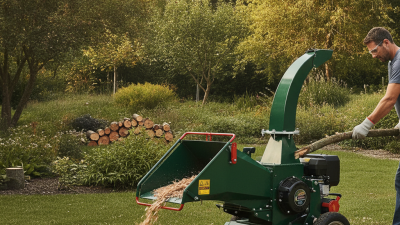
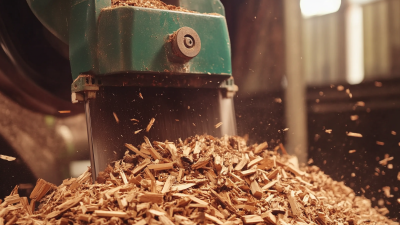
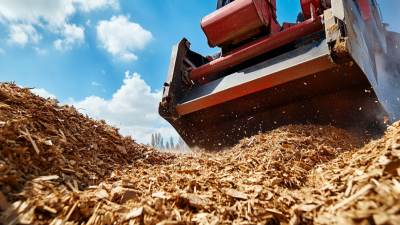
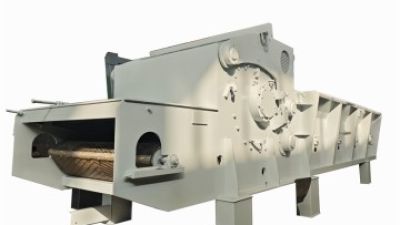
A 3 Point Chipper is really just a chipper that mounts on a tractor. It takes branches, limbs, and smaller logs and turns them into wood chips you can actually handle. It hooks up to the tractor’s three-point hitch, and most of the time it gets its power from the rear PTO shaft. That setup means you don’t need a separate engine, trailer, or tow vehicle.
As John Garland—a forestry safety specialist and former professor at Oregon State University—puts it, “Capacity means little without controlled feeding and safe operation.” And he’s got a point. A powerful 3 Point Chipper can chew through thick material, sure. But it won’t make up for bad maintenance or careless feeding. At the end of the day, the operator sets the pace.
Inside the machine, rotating knives cut the wood against a fixed anvil. A flywheel, drum, or disc stores cutting energy and helps keep momentum going. The chips then shoot out through a discharge chute, often landing in a pile a few feet away. That simple motion hides some pretty important engineering choices.
Different models handle infeed in different ways. Some just rely on gravity. Others use hydraulic rollers to pull branches in. Tractor horsepower, PTO speed, blade design, and throat size all play a role. Wet wood can feed differently than dry wood. Knotted branches? They can act unpredictably.
It’s not always effortless, either. I once figured a bigger tractor would solve every problem. It didn’t. Correct alignment, sharp knives, and steady feeding mattered more than I expected. This guide looks at how a 3 Point Chipper works, where it does well, and what limitations are worth thinking through before you buy one.
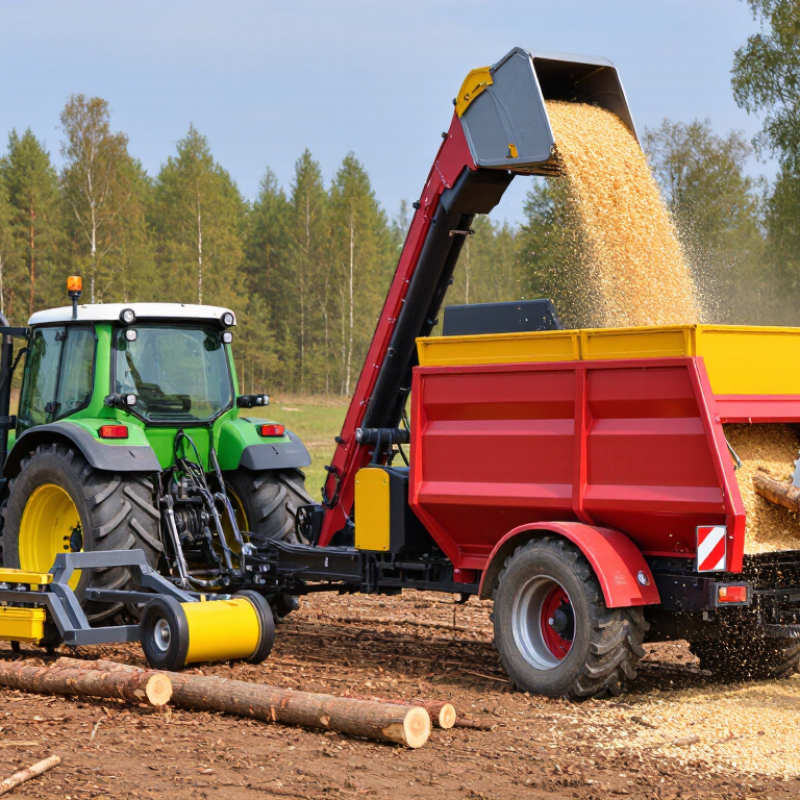
A Three Point Hitch Chipper is a compact wood-processing machine attached to a tractor’s three-point hitch. Its basic purpose is simple: it reduces branches, brush, and small logs into manageable wood chips. The tractor supports the chipper, while the power take-off transfers rotational energy to its cutting system.
Most models use a feed chute, cutting rotor, knives, and discharge outlet. A branch enters the chute and reaches the rotating knives. The knives slice the wood repeatedly until smaller pieces leave through the outlet. Chip size depends on knife design, rotor speed, branch thickness, and feeding technique. Fresh branches usually move more smoothly than dry, twisted material.
In practical field use, the hitch connection provides useful stability on uneven ground. It also lets one tractor handle several property-maintenance tasks. However, the machine is not a magic solution. A bent branch can shift suddenly, and wet leaves may slow the feed opening. Operators should inspect the hitch pins, guards, knives, and PTO shield before starting. Loose clothing and hands must stay away from the feed area.
A useful detail is balance. Heavy material placed too quickly can strain the tractor and chipper. I have found that steady feeding produces more consistent chips, although real piles rarely cooperate. That small limitation deserves attention. Correct adjustment, clear working space, and patient operation matter as much as engine power.
A 3-point chipper attaches to a tractor through its three-point hitch. The hitch supports the machine and keeps it aligned during operation. A power take-off shaft transfers engine power to the chipper’s rotor. Correct shaft length matters. A poor fit can cause vibration, wear, or unsafe movement.
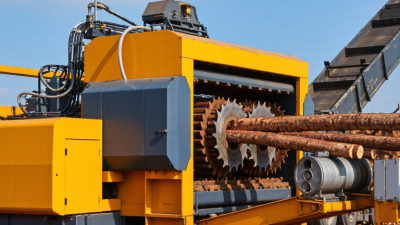
The feed hopper guides branches toward the cutting chamber. Inside, rotating knives strike the wood against a fixed counter-knife. This cutting action produces chips instead of simply crushing the branches. The rotor, bearings, and cutting knives form the machine’s working core. A discharge chute then directs chips away from the housing. Some models use adjustable chutes, which help place chips into a trailer or along a planting row. The frame carries these loads and reduces twisting around the hitch.
A China 3 Point Chipper may also include a hydraulic feed system. Feed rollers grip branches and move them at a controlled speed. This feature reduces hand pressure and supports steadier feeding. Guards cover moving parts, while shear bolts or similar devices can protect the driveline from sudden overloads. Operators should check knife sharpness, bolt tightness, and PTO shielding before use. A dull knife often increases vibration and fuel demand. It is easy to overlook the counter-knife. That small gap affects chip size and cutting effort. In practice, branch moisture, diameter, and forked shapes can change performance more than expected.
A 3-point chipper connects to a tractor through two lower lift arms and one adjustable top link. This triangular arrangement supports the machine and controls its angle during operation. The lower arms carry most of the weight. The top link stabilizes the chipper and limits unwanted movement.
Before attachment, park on level ground and shut down the tractor. Align the lower arms with the chipper’s mounting pins. Insert locking clips after fitting each arm. Then connect the top link and adjust it until the chipper sits level. Small errors matter. A tilted machine can feed branches unevenly.
The PTO shaft transfers power from the tractor to the chipper. ASABE S203.14 covers rear PTO dimensions and operating requirements, including common 540-rpm systems. Match the chipper’s PTO speed to the tractor’s setting. Never force an incompatible shaft. Check shaft length while the hitch rises and lowers. It must not bind or separate. NIOSH agricultural safety reports consistently identify tractor rollovers and power-take-off contact as serious hazards. A PTO shield, functional locking pins, and a properly fitted rollover protective structure are essential. These checks feel slow in the field. They are still cheaper than a damaged driveline or preventable injury.
| What Is a 3 Point Chipper and How Does It Work? - How a 3-Point Chipper Attaches to a Tractor | ||
|---|---|---|
| Data Dimension | Typical Specification | How It Works or Why It Matters |
| Attachment method | Category I or Category II three-point hitch | The tractor's two lower lift arms support the chipper, while the adjustable top link controls its angle and stability. |
| Category I hitch pin sizes | Lower lift pins: approximately 7/8 in (22 mm) Top-link pin: approximately 3/4 in (19 mm) | Common on compact and small utility tractors. The tractor and chipper must use compatible hitch categories or approved bushings. |
| Category II hitch pin sizes | Lower lift pins: approximately 1 1/8 in (28.6 mm) Top-link pin: approximately 1 in (25.4 mm) | Common on larger utility tractors. A Category II chipper generally requires a tractor with a matching Category II hitch. |
| Required PTO speed | Typically 540 rpm | The tractor's rear power take-off transfers rotational power through a guarded driveline to the chipper rotor or flywheel. |
| Typical tractor power range | Approximately 25–75 engine horsepower | Actual requirements depend on the rotor size, wood diameter, feed rate, terrain, and the chipper's operating manual. |
| Typical machine weight | Approximately 400–1,200 lb (180–545 kg) | The tractor must have enough rear lift capacity and ballast to raise and transport the chipper safely without excessive front-end lightening. |
| Typical feed opening | Approximately 4–8 in (100–200 mm) | The opening determines the largest branch size that can normally be processed. Hard, crooked, or wet wood may require a smaller diameter. |
| Cutting system | Rotating flywheel or drum with replaceable knives | PTO power spins the cutting assembly. Knives slice branches against a fixed anvil, producing smaller wood chips. |
| Typical chip size | Approximately 1–4 in (25–100 mm) | Chip size is influenced by knife condition, anvil clearance, rotor design, and the diameter and type of wood. |
| Discharge system | Adjustable discharge chute, often with a rotating deflector | The chute directs chips away from the tractor and allows the operator to place material into a pile, trailer, or designated area. |
| Connection sequence | Lower links first, top link second, PTO shaft last | With the tractor engine off and PTO disengaged, the lower links are pinned, the top link is connected, and the PTO shaft is attached with its guard in place. |
| PTO driveline safety | Shielded PTO shaft with a correctly sized telescoping guard | The driveline must not be too short or too long during lifting and turning. The tractor must be stopped before servicing or clearing blockages. |
| Three-point hitch position | Raised for transport; lowered and stabilized for operation | The hitch carries the chipper's weight and keeps the cutting unit at the designed working height while the tractor moves slowly. |
| Recommended operating speed | Low ground speed; PTO at the specified rated speed | A slow travel speed gives the cutting system time to process branches and helps maintain control on uneven ground. |
| Key compatibility checks | Hitch category, PTO speed, tractor lift capacity, PTO shaft length, and horsepower | Matching these specifications helps prevent driveline damage, poor cutting performance, unstable transport, and unsafe operation. |
| Operator protection | Feed hopper, discharge guard, PTO shield, eye protection, hearing protection, and close-fitting clothing | Branches can eject unexpectedly, and rotating parts can cause severe injuries. Safe operating distance and the manufacturer's procedures are essential. |
| Note: Specifications are typical industry ranges for three-point tractor chippers. Exact requirements vary by equipment design, and the specific operating manual should always take priority. | ||
A 3-point chipper attaches to a tractor’s rear three-point hitch. The tractor’s power take-off, or PTO, drives the chipper rotor. Before operation, the operator checks hitch pins, guards, belts, knives, and the PTO shield. The machine should stand on firm, level ground. The work is physical.
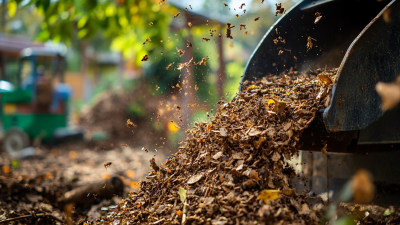
The process begins with sorting the material. Remove soil, stones, wire, and visibly rotten sections when practical. These contaminants can damage knives and create dangerous projectiles. The operator places a branch into the feed chute, usually butt-end first. Feed rollers or gravity guide it toward rotating knives. The knives slice the wood against a counter-plate. A screen or discharge opening then controls chip size. Chips leave through a chute and collect in a trailer, bin, or mulch bed. Feed slowly. Never force a crooked branch.
The U.S. Environmental Protection Agency reported 35.4 million tons of yard trimmings generated in 2018, with 24.4 million tons composted or mulched. That figure shows why controlled chipping matters. It turns bulky material into a more manageable resource. The FAO’s Global Forest Resources Assessment 2020 also states that forests cover about 31% of global land area, making responsible handling of woody residues increasingly relevant.
In practice, branches do not always feed neatly. I still stop the PTO, lower the engine speed, and inspect the chute when vibration changes. Small delays are cheaper than damaged equipment.
A three-point chipper transfers tractor power through the rear PTO, gearbox, and cutting rotor. The PTO commonly runs at 540 rpm, equal to nine rotations per second. ISO 500-1 defines standard PTO speed categories, including 540 and 1,000 rpm. That difference matters. A rotor designed for 540 rpm can suffer severe stress when driven at 1,000 rpm. Operators should verify the implement label, tractor setting, and shaft direction before engagement.
The driveline also needs adequate torque, not only advertised horsepower. A 2023 USDA Forest Service mechanization report stresses matching equipment capacity with available tractor power and operating conditions. Wet wood, large branches, and a blocked discharge chute increase load quickly. In practical use, the tractor should remain stable while the chipper stays level on all three hitch points. The PTO shaft must have correct overlap, shielding, and limited-angle joints. OSHA agricultural safety guidance identifies rotating PTO components as serious entanglement hazards, so guards cannot be treated as optional.
For a Wholesale 3 Point Chipper, buyers should request PTO horsepower requirements, maximum input speed, rotor inertia, and recommended feed size. These figures reveal more than a product photograph. I have seen operators choose a machine by tractor horsepower alone. That is an imperfect method. Hydraulic flow, tire grip, ballast, and operator response can change real performance. Stop the PTO before clearing a jam. Never rely on engine idle speed as a safety control.
A 3-point chipper mounts to a tractor’s three-point hitch and uses the PTO to power its cutting rotor. Branches enter the feed chute, where rotating knives cut them into smaller chips. The tractor must provide suitable PTO speed, hydraulic capacity, and lifting strength. A High-Quality 3 Point Chipper should have balanced blades, secure guards, and a stable frame. That label alone proves little. Inspect the actual construction.
Safety begins before the tractor moves. Read the tractor and chipper manuals carefully. Inspect guards, hitch pins, PTO shields, and hydraulic lines. Keep people and animals well away from the discharge area. Never reach into a blocked chute. Use a suitable push tool instead. Shut off the PTO, stop the engine, and wait for the rotor to stop completely before clearing debris. Wear eye protection, hearing protection, gloves, and close-fitting clothing. Loose sleeves can catch quickly. Even careful operators can become careless after a long workday. No checklist is perfect.
After each session, remove packed chips and check the knives for cracks or dull edges. Grease specified points, tighten loose fasteners, and inspect belts or bearings for unusual heat. Dull knives increase vibration and fuel use. Replace damaged parts before operating again. Common applications include orchard prunings, storm cleanup, landscaping waste, and small woodland maintenance. Wet, tangled branches may feed poorly and overload the machine. I have learned that minor vibration often deserves attention, not dismissal. Small mistakes leave evidence.
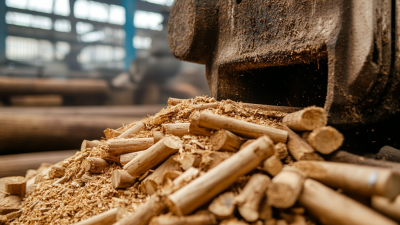
The global management of wood waste is becoming increasingly important as forestry, agriculture, and urban landscaping generate large volumes of branches, logs, and processing residues. According to the FAO’s *Global Forest Resources Assessment 2020*, forests cover approximately 4.06 billion hectares, or 31% of the world’s land area. Although global forest-loss rates have slowed, the continued use of forest and agricultural resources creates a strong need for efficient residue handling. Converting bulky wood waste into uniform chips can reduce storage requirements, simplify transport, and provide a practical feedstock for biomass energy and soil applications.
Market research from MarketsandMarkets indicates that demand for wood-chipping equipment is supported by expanding biomass utilization, landscaping services, and commercial wood processing. A China-based Wood Chipper Machine factory can respond to these needs with high-performance equipment designed for continuous material reduction. The machine processes branches, trunks, and other wood residues into manageable chips, while adjustable output sizes support different applications, including fuel production, agricultural use, and landscape maintenance. Robust construction, dependable operating performance, and customizable chip dimensions help users improve waste-handling efficiency and integrate wood residues into a more productive circular-resource system.
It is a compact wood-processing machine attached to a tractor’s rear three-point hitch. It turns branches, brush, and small logs into wood chips.
The tractor’s PTO drives a rotating rotor inside the chipper. Branches enter the feed chute, meet rotating knives, and leave through a discharge outlet.
It usually handles branches, brush, and small logs. Remove soil, stones, wire, and badly rotten wood whenever practical. Contaminants can damage knives.
Sort the material first. Place branches into the chute, usually with the thicker end first. Feed slowly and let the knives pull the material through.
Steady feeding usually creates more consistent chips. Chip size depends on knife design, rotor speed, branch thickness, and feeding technique. Real piles remain unpredictable.
Inspect hitch pins, guards, belts, knives, and the PTO shield. Use firm, level ground with clear space around the machine. Small checks prevent expensive problems.
Keep hands and loose clothing away from the feed chute. Never force a crooked branch into the machine. Stop the PTO before inspecting a blockage or unusual vibration.
Yes. Fresh branches often feed more smoothly than dry, twisted material. Wet leaves may slow the feed opening. The machine is useful, but not magical.
The hitch supports the chipper and improves stability on uneven ground. One tractor can also handle several property-maintenance tasks. Balance still matters.
Stop the PTO, reduce engine speed, and inspect the chute. Feeding heavy material too quickly can strain both machines. Waiting feels inefficient, but it is usually wiser.
A 3 Point Chipper is a tractor-mounted machine designed to turn branches, limbs, and other suitable wood waste into manageable chips. It typically includes a feed chute, cutting rotor or flywheel, knives, discharge chute, frame, and protective guards. The chipper connects to a tractor through the three-point hitch, which supports the equipment and allows it to be raised or lowered. Power is transferred from the tractor’s power take-off through a driveline to rotate the cutting system.
During operation, the operator places properly sized wood into the feed opening, where rotating knives cut it into smaller pieces before directing the chips through the discharge chute. Safe use requires guarding moving parts, wearing appropriate protective equipment, keeping bystanders away, and following the machine’s operating limits. Regular inspection, knife sharpening, lubrication, and removal of accumulated debris help maintain performance. A 3 Point Chipper is commonly used for woodland management, landscaping, storm cleanup, farm maintenance, and producing mulch or other useful wood material.