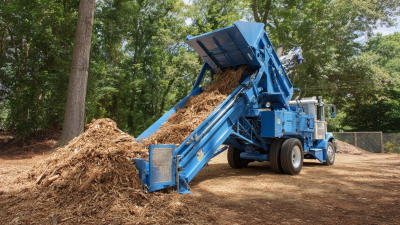
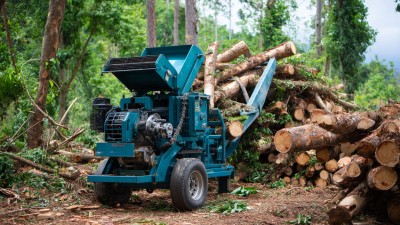
You know how brush piles never seem to stay small for long, right? For anyone working with trees, farms, or land management, a skid steer-mounted chipper can be a real game-changer. It turns those big, bulky branches into manageable chips without needing a separate power source — pretty neat! According to the EPA’s 2018 Fact Sheet on Sustainable Materials Management, Americans threw away about 35.4 million tons of yard waste that year. That number really shows just how much material there is out there. But hey, that doesn’t mean every site needs the same kind of machine; it’s all about what fits your needs best.
If you’re shopping for a wood chipper for your skid steer, this guide on the Top 10 Best Wood Chippers for Skid Steers in 2026 has got you covered. I’ve compared things like hydraulic flow requirements, feed opening size, branch capacity, rotor design, discharge options, how easy it is to access for maintenance, and overall weight — all pretty important stuff. Just a heads-up: aWood Chipper For Skid Steer has to match your equipment, not just look good on paper. Make sure to check your skid steer’s auxiliary flow specs and operating limits before you start comparing models. Keep in mind, wet wood, hard hardwoods, or dull blades can really cut down your throughput. The numbers you see online are helpful, but they’re only part of the story.
Details matter — like, a grease point that’s a pain to reach can turn routine maintenance into a hassle. Or an improperly aimed chute could send chips flying everywhere, making a mess. This ranking is based on published specs and manufacturer info, not on hands-on testing under identical conditions — which is worth noting. Use this list to narrow down your options, then double-check if the machine fits your workload, support needs, and operating conditions. It’s all about finding the right fit for what you do day-to-day, not just going for the flashy numbers.
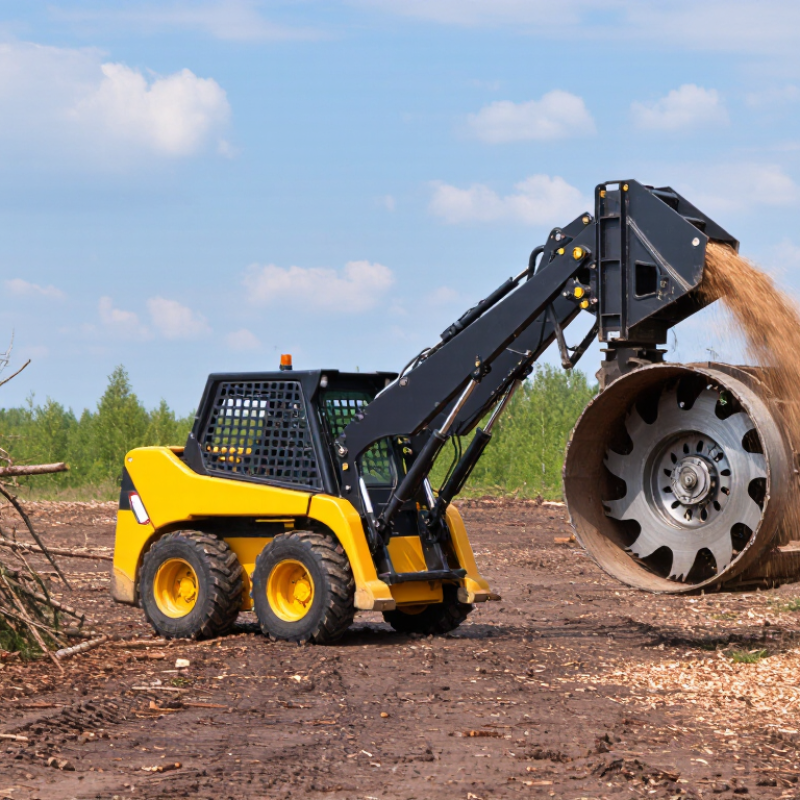
Hydraulic Flow Classes: 15–25 GPM Standard vs. 26–40 GPM High-Flow
Hydraulic flow determines whether a skid steer can run a chipper steadily, not just whether the hoses connect. Standard-flow models commonly suit 15–25 GPM, while high-flow models are designed around 26–40 GPM. Check the chipper’s stated operating range against the loader’s measured output and pressure rating. Numbers matter. A mismatch can mean slow feeding, frequent stalls, excess heat, or poor rotor speed. Higher flow is not automatically better; the attachment must be built to handle it.
Before choosing a China Wood Chipper For Skid Steer, check the machine’s manual and confirm whether its flow rating is continuous or tied to a specific setting. Also verify pressure limits, return-line requirements, and any case-drain connection. On a jobsite, note how the chipper behaves with dry branches and tougher, green wood; load changes can reveal problems a quick idle test misses. I would not assume a high-flow unit will outperform a standard-flow one on every loader. That comparison needs real operating details, and listings do not always make them clear. Check twice.
Chipper Design Basics: Disc vs. Drum Rotors and Hydraulic Feed Systems
Disc and drum rotors handle material differently. A disc uses a heavy, rotating plate with knives that slice branches against an anvil. It can produce consistent chips, but long, crooked limbs may need careful positioning. A drum carries knives around a cylinder and often accepts irregular brush more steadily. Rotor shape alone does not guarantee speed or chip quality. Real wood is messy.
On skid steers, hydraulic feed rollers matter as much as the rotor. Match their flow and pressure requirements to the machine’s hydraulic capacity; weak feed can leave branches rocking at the hopper. The USDA Forest Products Laboratory’s Wood Handbook (FPL-GTR-282, 2021) places wood’s fiber saturation point at roughly 25–30% moisture content, on an oven-dry basis. Wet wood near or above that range can feel heavier and feed differently, while dry limbs may snap and bounce. These details affect practical throughput, though moisture is only one factor. Treat published capacity figures as test results, not promises for every pile. A short, straight branch tells only part of the story.
Top 10 Skid-Steer Chippers Ranked by Flow, Inlet Size, and Rated Capacity
A useful 2026 ranking compares skid-steer wood chippers by hydraulic flow, inlet size, and rated capacity. These figures show different parts of a machine’s performance. Flow requirements must match the carrier’s auxiliary hydraulics, including pressure and continuous-flow limits. Too little flow can slow feeding; excess flow may exceed the attachment’s specifications. Numbers can mislead.
Inlet dimensions affect the size and shape of branches the chipper can accept. A wider opening helps with forked limbs, but it does not guarantee smooth feeding. Look for the throat dimensions, feed mechanism, and any stated material limits. Rated capacity also needs context: wood species, moisture, and branch shape can change real output. A published tons-per-hour figure is a comparison point, not a promise on every job.
For a practical top-ten comparison, record each model’s required flow, inlet width, and rated capacity in one table. Check whether flow is listed as a range and whether capacity uses consistent units. Small differences matter. When sourcing a Wholesale Wood Chipper For Skid Steer, confirm that the machine’s weight and hydraulic demand suit your carrier, not just your workload. I would treat rankings cautiously when test conditions are missing; that detail is easy to overlook.
Matching Maximum Branch Diameter and Throughput to Worksite Demand
A skid-steer chipper’s maximum branch diameter is a limit, not a reliable daily production target. Forked limbs, wet leaves, and crooked feed can slow the rotor, even when each stem fits the opening. Hydraulic flow and pressure matter too. Check the attachment’s requirements against the loader’s actual auxiliary output, then compare rated throughput using the same units and feed conditions. Short test runs help. Record the material processed and any stalls. Those figures are more useful than a brochure’s best-case rate.
The USDA Forest Products Laboratory’s Wood Handbook (FPL-GTR-282, 2021) provides species-specific wood density and moisture data—two factors that change how much material a rotor must handle. A six-inch green hardwood limb can demand more from a chipper than a dry, straight softwood limb of similar diameter. For a High-Quality Wood Chipper For Skid Steer, choose capacity around the worksite’s common branch size, not its rare largest log. Estimate hourly volume, allow for sorting and repositioning, and verify the estimate during a representative shift. I would still question any projection based only on diameter; real piles are inconsistent, and small delays add up.
Attachment Fit: Mounting, Couplers, Case Drain, and Operating Weight
Choosing the Best Wood Chipper For Skid Steer starts with the attachment interface, not the cutting drum. Match the mounting plate to the loader’s coupler and check that the locking pins engage fully. A plate that looks close can still leave play, which may cause movement under load. Measure before delivery.
Hydraulic compatibility deserves equal attention. Compare the chipper’s required flow and pressure with the machine’s actual specifications, then confirm hose size and routing. Some motors also require a case drain. If the attachment calls for one, connect it to the correct low-pressure return; skipping this detail can damage seals. Keep hoses clear of sharp edges and pinch points. Small checks matter.
Operating weight can be easy to underestimate. Add the attachment’s weight to the material in its hopper or feed area, then consider how far the load sits from the loader’s lift arms. Capacity often drops as the load moves forward. Check the operator manual and rated operating capacity on firm, level ground. I would also inspect tire or track condition before work. That part is sometimes overlooked. A careful fit check takes minutes, though I still find it worth repeating after the first test run.
Safety Evaluation: ANSI Z133 Guidance, Feed Controls, and Personal Protective Gear
A skid-steer wood chipper can pull branches inward faster than an operator can react. A CDC/NIOSH review recorded 31 work-related deaths involving wood chippers from 1992 through 2002. The recurring danger is entanglement at the infeed. ANSI Z133 guidance and the machine’s operating manual should inform the site’s feed and emergency-stop procedures. Before work, confirm that controls respond correctly and remain reachable from the operator’s working position. Keep hands and feet outside the feed opening; never reach in to clear a jam while the machine is running. Small branches can snag sleeves, gloves, or loose clothing. That detail is easy to underestimate.
PPE helps, but it cannot replace safe controls and training. Use a hard hat, eye and face protection, hearing protection, sturdy footwear, and close-fitting clothing suited to the task. NIOSH’s occupational noise criteria recommend limiting exposure to 85 dBA over an eight-hour workday; measure noise near the operator, rather than guessing from a distance. Hearing protection must fit properly. Check it. A spotter can help manage brush flow, but should stand clear of the feed path and follow an agreed stop signal. Even a careful checklist has limits: wet material, tangled limbs, and fatigue can change how a load behaves. Reassess when conditions shift.
Lifecycle Comparison: Knife Service, Wear Parts, Maintenance, and Downtime
Top 10 Best Wood Chippers for Skid Steers in 2026
A chipper’s purchase price says little about its lifetime cost. Compare knife service intervals, sharpening options, and replacement costs. Some designs allow knives to be reversed; others require different service procedures. Check the manual before assuming a knife can be sharpened or reused. Wet hardwood, soil, and hidden stones can dull cutting edges quickly. That matters. A practical comparison should account for the material being processed, not just advertised capacity. Keep a simple log of operating hours, knife changes, and sharpening labor. It can reveal whether a seemingly durable machine is actually costing more time.
Wear parts also shape downtime. Inspect feed rollers, belts, bearings, and hydraulic connections for clear service access. Small parts count. If routine checks require removing guards or shifting equipment, maintenance may take longer than expected. Ask how readily common replacement parts can be obtained, and keep critical spares available when work schedules are tight. Estimate downtime as well as repair expense: a lost workday can outweigh a modest difference in parts prices. One comparison can still mislead. Real workloads vary, and a neat spreadsheet cannot capture every jam, dull edge, or delayed delivery. Look for service guidance that is specific, documented, and realistic about maintenance demands.
Conclusion
Choosing the right Wood Chipper For Skid Steer begins with matching the attachment to the machine’s hydraulic flow. Standard-flow units typically operate around 15–25 GPM, while high-flow systems may support 26–40 GPM, depending on equipment specifications. Rotor design, whether disc or drum, and the hydraulic feed system influence how material is drawn in and processed. Comparing the top options by flow requirements, inlet size, and rated capacity helps operators identify a suitable balance of performance and compatibility.
Worksite needs should guide the maximum branch diameter and expected throughput, while mounting style, couplers, case-drain requirements, and operating weight must fit the loader. Safe operation depends on following applicable safety guidance, using feed controls correctly, and wearing suitable protective gear. Long-term value also involves more than purchase price: knife servicing, wear-part replacement, routine maintenance, and potential downtime all affect productivity and ownership costs.