So, you're picking the best wood pellet press for 2026? Honestly, it's not all about the biggest motor. You gotta start with what you're actually feeding into it. Like, a small farm just pressing dry sawdust? That's a whole different ballgame compared to a big mill dealing with mixed residues. And don't forget the little things—die design, roller pressure, motor rating, how well it handles moisture, and whether you can easily get replacement parts. They all play a role in your daily output. The advertised capacity? Yeah, that's just the hook—the real story is in the details. Hey, quick question—did they measure that using your feedstock? Or was it a different one? Just curious.
Look, the market gives this decision some real context. The U.S. Energy Information Administration just reported that Wood Pellet exports hit roughly 9.1 million short tons in 2023 – that's a big number showing just how much commercial demand is out there. The EIA's trade data is useful background, sure, but it doesn't tell you which press will actually work for your operation. For that, you need a feedstock trial. And the little details matter a lot – damp sawdust can slow down production, and inconsistent particle size can weaken the pellets. It's not glamorous, but it can get costly if you overlook it.
Alright, so this guide covers the basics—press types, real-world capacity, power draw, and how the suppliers actually back you up. We also poked into safety and whether you can still find spare parts down the road. But here's the thing: a shiny spec sheet can hide a lot. Don't fall for any 'best' claim unless they've tested under the same conditions. Before you even look at price, check what feedstock you'll run, how many hours a day, and what maintenance looks like. And honestly, a quick trial run tells you more than any sales pitch. Sometimes you'll find that a smaller machine is the smarter move.
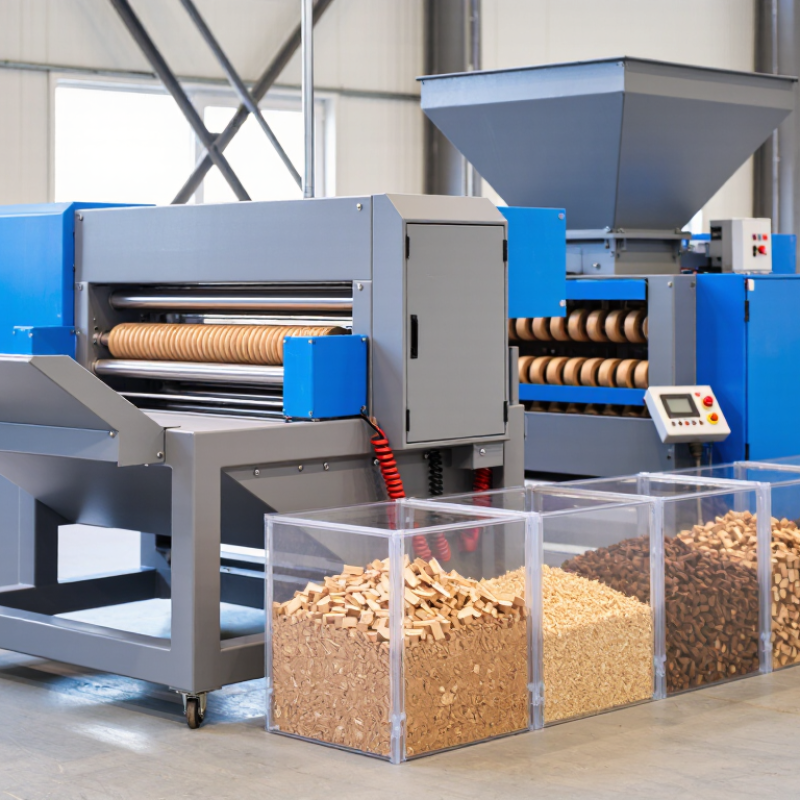
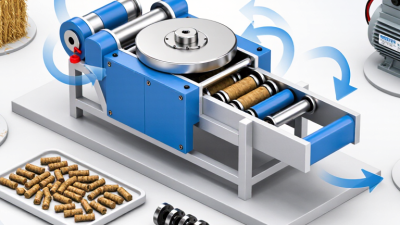
A flat-die press uses rollers over a horizontal die. It is usually simpler to inspect and practical for small batches, pilot runs, or changing feedstock. A ring-die press forces material through a circular die and is commonly selected for continuous, higher-volume production. Its larger output can come with more complex maintenance and a higher purchase cost. Small batches matter. The Wood Pellet Press Machine should match your daily production target, not just its advertised capacity.
IEA Bioenergy Task 40 market assessments place global wood-pellet production in the mid-40-million-tonne range in 2022. That scale reflects established industrial demand, but it does not prove every buyer needs a ring die. Moisture, particle size, wood species, and motor load all affect real output. Ask suppliers for a trial using your own prepared sawdust, then compare pellet durability, power use, and die wear. A neat spreadsheet can still mislead; actual feedstock may behave differently.
Tips: For occasional production, compare flat-die upkeep and replacement-part access. For steady shifts, check ring-die output under your target moisture level. Test the actual sawdust. A short trial may reveal uneven pellets or unexpected power draw. I would not treat a single test as final proof, either.
2026 Best Wood Pellet Press for Sale?
Choosing a wood pellet press starts with the feedstock, not the advertised output. Dry sawdust behaves differently from damp shavings or mixed wood fibers. Check particle size and moisture consistency before comparing machines. A feedstock that bridges in the hopper can interrupt production, even when the press is powerful enough. Small details matter.
Match the die size and compression to your material and desired pellet dimensions. A die that is too restrictive may increase wear or reduce throughput; one that is poorly matched may produce weak pellets. Compare motor power with rated capacity, but treat capacity figures as reference points, not guarantees. Actual output varies with feedstock, preparation, die condition, and operator settings. Ask how the rating was measured, and request a test using your own material when possible.
Tips: Bring a representative feedstock sample when assessing a press. Check pellet firmness, motor load, and steady output during a test run. Test your own mix. Also consider replacement-die availability and routine cleaning time; these are easy to overlook when comparing specifications.
| Feedstock and Typical Use | Preparation and Moisture | Common Die Hole Size | Typical Press Type | Indicative Motor Power | Indicative Rated Capacity | Selection Notes |
|---|---|---|---|---|---|---|
| Clean, dry sawdust for small-scale heating pellets | Screen out stones and metal; typically condition to about 8–12% moisture before pressing. | 6 mm or 8 mm | Small flat-die press | Approximately 7.5–15 kW | Approximately 80–250 kg/h | A practical entry-level option for intermittent production. Output depends strongly on sawdust particle size, species, and die condition. |
| Softwood sawdust for residential heating pellets | Use consistent, finely milled material; typically target about 8–12% moisture at the press inlet. | 6 mm or 8 mm | Commercial ring-die press | Approximately 90–160 kW | Approximately 1–2.5 t/h | Often suited to continuous production. Confirm the supplier’s rated output using the intended wood species and moisture level. |
| Hardwood sawdust or mixed hardwood residues | Dry and mill to a uniform particle size; moisture and material consistency may require careful adjustment. | 6 mm or 8 mm | Commercial ring-die press | Approximately 110–200 kW | Approximately 0.8–2 t/h | Harder or less uniform feedstock can reduce throughput and increase die and roller wear compared with clean, consistent sawdust. |
| Wood shavings, chips, or coarse sawmill residues | Screen and hammer-mill before pressing; dry to a suitable, consistent moisture level, commonly around 8–12%. | 6 mm or 8 mm | Ring-die press with upstream size reduction | Approximately 132–250 kW for the press; grinder power is additional. | Approximately 1–3 t/h after preparation | Do not size the press alone: include the grinder, Dryer, conveyors, and dust-control equipment when planning total line capacity. |
| Large-volume, prepared wood residue for industrial pellet production | Consistent, screened, finely milled feedstock; moisture control and steady material supply are essential. | 6 mm or 8 mm, selected for the target pellet specification | Heavy-duty ring-die press or multiple presses | Approximately 250–500 kW per press | Approximately 3–8 t/h per press | High ratings generally require optimized feedstock and continuous operation. Request a performance guarantee tied to a defined material specification. |
| Important: Power and capacity figures are indicative ranges, not guaranteed machine specifications. Actual output varies with feedstock species, particle size, moisture, bulk density, die design, operating settings, and equipment condition. Verify rated capacity with a feedstock trial and compare the complete production line, not just the pellet press. | ||||||
When comparing wood pellet presses in 2026, look beyond hourly capacity. ENplus ST 1001:2022 sets the A1 moisture limit at 10% by mass. That figure applies to finished pellets as received. It is a useful benchmark, not proof that a press will consistently meet it. Check the actual output.
Moisture affects the energy available from pellets because water must heat up and evaporate during combustion. Pellets that feel cool or crumble at the edges may deserve closer testing. But touch alone is not reliable. Ask for results from a representative batch, using a recognized method such as ISO 18134-2:2017 for solid biofuel moisture measurement. Keep the sampling date and location with the result; small sampling errors can distort a comparison.
During a press trial, record moisture at the die outlet and after cooling. Fresh pellets can change as heat and moisture escape, so the cooled product matters more than one machine-side reading. Request trial data across more than one batch and ask how feedstock moisture was controlled. One excellent sample proves little. Real production is less tidy. ENplus A1 also specifies other quality measures, so moisture should be one part of a broader pellet-quality check.
For a 2026 wood pellet press, rated output is only part of the buying decision. Ask for durability and fines test results from pellets made with your intended feedstock. ENplus ST 1001:2022 sets A1 mechanical durability at a minimum of 98% and fines at a maximum of 1%. Small numbers matter. A press that produces attractive pellets in a brief trial may behave differently after hours of operation.
Durability testing under ISO 17831-1:2015 measures how well pellets withstand mechanical handling. Fines can be assessed using ISO 18846:2016. Request the test method, sample size, and results, not just a sales claim. Dust tells a story. Check the discharge area and collect samples at several points during a run; uneven feed moisture or worn rollers can change pellet quality. China Wood Pellet Press suppliers should be evaluated by the same evidence as any other supplier. I would not treat one clean sample as proof of consistent performance. Ask for repeated test results, and check whether the reported figures apply before or after handling.
A 2026 wood pellet press offer is only useful when its full operating cost is clear. Compare the quoted price with motor power, die size, included tooling, and delivery charges. A low entry price can hide costly wear parts. For a Wholesale Wood Pellet Press purchase, ask for a written list of included components. Also request sample output figures for the feedstock you plan to use. Small details matter.
Tips: Request warranty terms in writing, including coverage for the motor, gearbox, and die. Check the claim process, response time, and whether labor or shipping is excluded. Ask how quickly common spare parts ship, and keep die and roller prices on file. A nearby stock point may matter more than a slightly lower machine price.
Compare warranty length carefully, but read exclusions before treating it as protection. Ask whether routine cleaning or feedstock moisture affects coverage. For parts access, confirm dimensions, part numbers, and compatibility before ordering; a vague promise is not enough. If the seller cannot answer, pause and verify with a technician familiar with pellet presses. I would not assume every published capacity figure matches a small workshop. That needs checking.
When comparing a High-Quality Wood Pellet Press, treat safety features as operating essentials, not sales extras. Check for a fixed belt guard, a reachable emergency stop, and overload protection suited to the motor. Fine wood dust can collect near hot bearings and electrical parts. Ask how the machine manages dust and heat. Dust matters. Keep the work area dry and clear of loose clothing, tools, and stored material.
Installation starts with a site that can support the press and allow safe access for cleaning. A level, rigid floor helps reduce movement and vibration. Confirm the required electrical supply, ventilation, and clearance in the operating manual before delivery. Have a qualified electrician check the connection if the specifications call for it. Match feedstock size and moisture to the machine’s stated limits; guessing can cause blockages or uneven output. Easy to miss.
Ongoing maintenance should follow the manufacturer’s schedule, not a convenient guess. Disconnect power before clearing a jam or inspecting moving parts. Check fasteners, cables, guards, rollers, and the die for wear, and lubricate only as directed. Remove built-up dust with a suitable method; blowing it into the air may spread it around the workspace. Keep a simple log of cleaning, adjustments, and unusual noise. A checklist helps, but it cannot replace careful inspection.
This chart counts practical topics to verify when comparing wood pellet presses: 5 safety checks, 4 installation checks, and 5 maintenance checks. These are checklist counts, not product ratings or performance claims. Confirm equipment-specific requirements with the manufacturer before purchase.
A flat-die press uses rollers over a horizontal die. It suits small batches and changing feedstock. A ring-die press is commonly used for steady, higher-volume production. Its maintenance can be more complex.
A flat-die model may be practical for pilot runs or occasional batches. Check how easily you can inspect it and obtain replacement parts. Small batches matter.
No. Rated capacity is a reference, not a guarantee. Real output depends on moisture, particle size, wood type, die condition, and operator settings.
Check moisture consistency and particle size. Dry sawdust behaves differently from damp shavings. Material that bridges in the hopper can interrupt production.
Request a trial using your own prepared material. Watch the motor load and steady output. Test your own sawdust.
Check pellet firmness, power use, and output over time. Collect samples from several points. One clean sample is not enough proof.
They indicate how well pellets withstand handling and how much breaks into small particles. Some A1 specifications require at least 98% durability and no more than 1% fines. Check the test method and sample details.
Ask for output results at your target moisture level. Also compare cleaning time, die wear, and routine maintenance. I may be overvaluing rated output here; a longer trial could change the picture.
Choosing the right Wood Pellet Press in 2026 starts with matching the machine to your production needs. Flat-die presses can suit smaller operations and flexible batches, while ring-die machines are generally better for steady, higher-volume production. Before buying, compare the feedstock type and condition with the press’s die size, motor power, and rated capacity; a mismatch can reduce output and affect pellet consistency.
Evaluate finished pellets as well as advertised machine performance. For ENplus A1 quality targets, moisture should not exceed 10%, mechanical durability should be at least 98%, and fines should be no more than 1%. Compare offers by total cost, warranty coverage, and access to replacement parts. Also check guards and emergency stops, installation requirements, and the routine work needed to keep the press operating reliably, including die and roller inspection, cleaning, and lubrication.