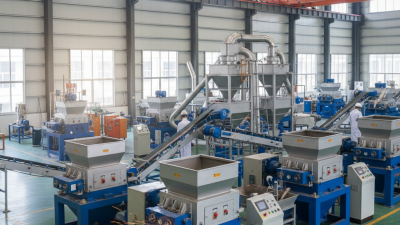
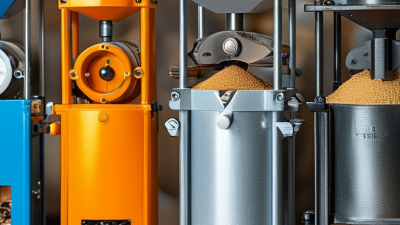
When you're choosing equipment for size reduction, it’s really important to start with your material—the machine's advertised capacity isn’t the whole story. For instance, a Hammer Mill Machine works by using rotating hammers and a screen to break down the material into smaller pieces. But keep in mind, the results can vary a lot depending on what you’re feeding into it and the conditions you’re operating under. So, think about what exactly you’ll process, the target particle size you need, how much output you want, and how many hours a day you'll be running it. Dry, brittle grains will behave very differently from fibrous or moisture-heavy materials—those little details really matter.
Things like screen size, rotor speed, hammer type, motor power, and feed rate all play a part in performance. For example, if you opt for a finer screen to get smaller particles, you might see a drop in throughput or maybe even more heat and wear on the machine. It’s a good idea to ask your suppliers for performance data based on similar materials, and see what kinds of screens and spare parts they’ve got available. Don’t forget to ask how easy it is to replace hammers quickly, how they handle dust, and what routine inspections look like. These little questions can save you headaches later—all that stuff matters, not just sales talk.
When you’re comparing options, make sure to look at the installation space you'll need, energy consumption, how easy it is to clean, how noisy it is, and how accessible the machine is for maintenance. If possible, try to run a trial using your own material. Check the sample’s consistency, temperature, and whether there are any unwanted fines. While catalog specs are helpful, they don’t tell you everything about how it’ll perform in your actual setup. That’s worth paying attention to. In the end, the best choice is a machine that consistently meets your product specs and operational needs, with enough flexibility to adapt if those needs change down the line.
Understand How a Hammer Mill Works and Where It Is Used
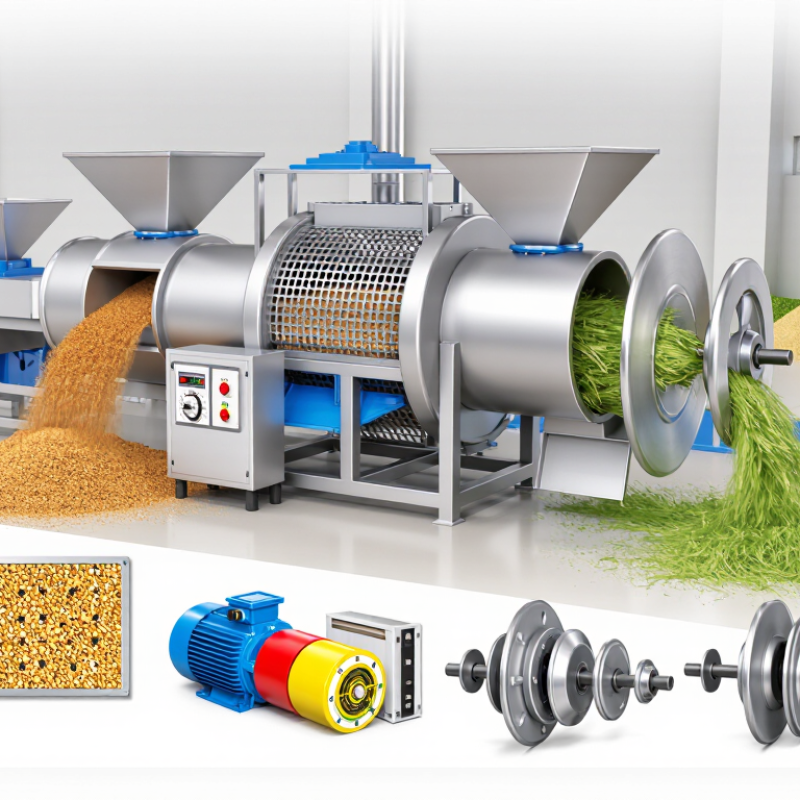
A Hammer Mill reduces material through repeated impact. A motor spins a rotor fitted with swinging or fixed hammers. As grain or other feedstock enters the chamber, the hammers strike it against a screen or breaker surface. Smaller particles pass through the screen openings; larger pieces stay inside for more impacts. The sound is sharp, and fine dust can collect near transfer points without effective extraction. Keep that in mind.
Screen size strongly influences the final particle size, but it is not the only factor. Rotor speed, moisture, feed rate, and material toughness also affect throughput and consistency.
1.29 billion metric tons
Alltech’s 2024 Agri-Food Outlook estimated global feed production at 1.29 billion metric tons in 2023, indicating the scale of one major application.
Hammer mills are also used to prepare grains, fibers, and some biomass for further processing. Each material behaves differently, so a trial with the actual feedstock is more useful than relying on a catalogue figure alone.
In a feed mill, operators may choose finer grinding when a recipe requires better mixing or smaller particles. A larger screen can improve capacity, though it may produce a coarser output. Check particle-size samples, motor load, screen wear, and dust-control arrangements during operation.
China Hammer Mill Machine searches may return many configurations, but specifications need context: compare the material tested, screen opening, and stated capacity.
One detail is easy to miss. A machine that handles dry grain well may struggle with damp, fibrous material. The right test can reveal that limitation early.
Identify the Material and Its Processing Requirements
How to Choose the Right Hammer Mill Machine?
Identify the Material and Its Processing Requirements
Start with the material, not the machine’s advertised capacity. Dry maize, fibrous straw, and brittle mineral materials behave differently under impact. Note moisture, abrasiveness, bulk density, and any heat sensitivity. Then define the required output: a coarse grind for mixing needs a different screen from fine powder for a downstream process. Small details matter. FAO’s 2023 Cereal Supply and Demand Brief estimated global cereal production at about 2.8 billion tonnes, but this scale is not a sizing guide for an individual mill. Your own feed rate and product specification matter more.
Check how the material flows and whether it clogs, wraps around the rotor, or wears screens quickly. A handful of representative material can reveal issues, but a controlled trial is better: record feed rate, screen size, motor load, and the particle-size distribution. I would not assume that a finer screen always produces a better result; it may raise energy use and reduce throughput. That trade-off deserves testing.
Tips: Send a representative sample and target particle size to the supplier before comparing a Wholesale Hammer Mill Machine. Ask for trial results using your material, including screen details, throughput, and power demand. If moisture varies between batches, say so; a recommendation based on one unusually dry sample may disappoint.
Set the Required Capacity and Particle Size
Set capacity from the real production target, not the largest number on a specification sheet. Calculate the hourly requirement, then confirm the supplier’s figure applies to your material, screen, and target fineness. A High-Quality Hammer Mill Machine can still miss its rated throughput when feed is damp, fibrous, or unusually hard. Test your actual material where possible. Small details matter.
Particle size needs an equally clear target. Wondra et al. (1995), in the Journal of Animal Science, studied corn ground to mean sizes of 1,000, 800, 600, and 400 micrometers. These are useful reference points, not universal settings: the right size depends on the next process and product requirements. ASABE Standard S319.4 describes sieve analysis for expressing feed-particle fineness. I would not assume one screen opening guarantees one final particle size; wear and material properties can change the result.
Tips: Write down required kilograms per hour and the acceptable particle-size range. Ask for test results using your feedstock and chosen screen. Check moisture, too. A short trial may reveal a mismatch before installation, though I would still verify performance under routine operating conditions.
How to Choose the Right Hammer Mill Machine? - Set the Required Capacity and Particle Size
Use the figures below as preliminary planning ranges for dry, reasonably free-flowing feed. Actual throughput depends on the material, moisture, feed size, screen, rotor speed, and mill configuration; confirm performance with the equipment supplier.
| Material or use case | Example capacity target | Typical target particle size | Starting screen aperture | Selection considerations |
| Grain for coarse animal feed | 1–5 t/h | About 1–3 mm | 2–4 mm | A larger screen opening generally supports higher throughput and a coarser product. Check whether the recipe requires a uniform grind. |
| Grain for finer feed or meal | 0.5–3 t/h | About 0.5–1.5 mm | 1–2 mm | Finer grinding usually reduces capacity and increases energy use. Consider heat generation and the mill’s screen area. |
| Wood chips or biomass for further processing | 0.5–5 t/h | About 3–10 mm | 4–10 mm | Feed size, wood species, moisture, and bulk density strongly affect throughput. Confirm that the mill is designed for fibrous material. |
| Dried herbs or plant material | 0.1–1 t/h | About 0.5–3 mm | 1–4 mm | Light, fibrous materials may need controlled feeding and dust collection. Verify temperature limits and product-quality requirements. |
| Mineral or other brittle material | 0.2–5 t/h | About 1–5 mm | 2–6 mm | Abrasiveness and hardness influence wear and energy demand. Check hammer and screen materials, and confirm the mill is suitable for the specific feed. |
| High-volume dry feed production | 5–20+ t/h | Set by product specification | Selected through material testing | Specify continuous operating hours, required availability, feed consistency, and downstream equipment capacity. A tested performance guarantee is preferable to a nameplate estimate. |
Important: Screen aperture is not the same as the final particle size. Particle-size distribution also depends on material properties, hammer design, rotor speed, and operating conditions. For reliable sizing, provide the supplier with a representative sample, feed-size range, moisture content, required hourly capacity, and target particle-size specification.
Compare Hammer Mill Designs and Configuration Options
Choosing a hammer mill means comparing the whole configuration, not just motor power. A gravity-discharge design can suit dry, free-flowing material and a compact layout. Pneumatic discharge helps move lighter particles away from the grinding chamber, but adds conveying equipment and energy demand. Horizontal and vertical rotor arrangements also affect access, footprint, and maintenance. Swinging hammers can tolerate some variation in feed; fixed hammers may suit consistent material and frequent replacement planning. Check screen area, hole diameter, hammer clearance, and rotor speed together.
Ask suppliers to test your actual feedstock. A screen change can alter particle size, throughput, and power draw. The ASABE S319.4 standard describes sieve methods for measuring and reporting feed-material fineness, giving buyers a common comparison basis. Useful data. IEA’s Energy Efficiency 2023 report estimates that industry uses about 37% of global final energy, a reminder to measure mill energy per tonne, not motor rating alone. For a Best Hammer Mill Machine, request test results at the target moisture and screen size. There is no perfect setting. I would recheck it after hammer wear; that detail is easy to overlook.
How to Choose a Hammer Mill Screen Opening
Smaller screen openings generally produce a finer grind, while larger openings allow coarser material to pass through. The values shown are nominal apertures for standard ASTM E11 test sieves; a hammer mill’s actual product size also depends on factors such as rotor speed, feed material, and mill configuration.
Evaluate Power, Safety, Maintenance, and Operating Costs
Choose a hammer mill using real feedstock trials, not motor rating alone. Throughput changes with material moisture, screen openings, and target particle size. Ask suppliers to record tonnes per hour and electricity use per tonne under your operating conditions. The U.S. Department of Energy’s Improving Motor and Drive System Performance sourcebook estimates that motor-driven systems use about 68% of electricity in U.S. manufacturing. That makes efficient sizing worth checking. An oversized motor may add cost without improving output. Small details count.
Safety deserves equal attention. The U.S. Chemical Safety Board’s 2006 Combustible Dust Hazard Study recorded 281 incidents, 119 deaths, and 718 injuries across industries from 1980 to 2005; these figures are not specific to hammer mills. Check guards, access doors, emergency stops, dust collection, and housekeeping procedures. Maintenance costs also extend beyond replacement hammers. Include screens, bearings, labor, downtime, and disposal in your estimate. Compare total cost per tonne over the expected service life, not just the purchase price. A spreadsheet can still miss real-world delays, so review assumptions with operators who will change screens and clear routine stoppages.
Check Machine Quality, Support, and Supplier Reliability
A reliable hammer mill should feel solid before it ever runs. Inspect welds, guards, rotor balance, screen fit, and access panels. Ask for material specifications and test records, not just a polished brochure. Check whether screens and hammers can be changed safely with ordinary tools. This matters during a rushed shift.
Support quality deserves the same scrutiny. Ask how quickly technicians respond, which parts are stocked locally, and whether the supplier provides commissioning and operator training. The U.S. Department of Energy’s Operations & Maintenance Best Practices Guide reports potential maintenance-cost savings of 8–12% for predictive maintenance over preventive maintenance, and 30–40% over reactive maintenance. These are broad estimates, not guaranteed savings for a hammer mill. Still, condition monitoring and timely service can help prevent avoidable breakdowns. Downtime is expensive.
Check supplier reliability through references from facilities with similar feedstock and operating hours. Request a written parts list, warranty terms, service response targets, and sample maintenance records. Ask what happens if a critical screen or bearing is unavailable. A careful supplier should answer plainly and admit limits. No checklist catches every weak point; that is worth remembering. A short factory visit may reveal more than several sales calls.
Efficient Biomass Pellet Cooling and Packing Equipment: A Practical Guide to Choosing a China Supplier
With global wood-pellet production estimated at about 48 million tonnes in 2022, according to Bioenergy Europe’s *Statistical Report 2024*, dependable post-production handling is increasingly important. Cooling and packing equipment should be selected as one coordinated line: pellets need adequate cooling before bagging to reduce condensation risk, while conveyors and transfer points should limit breakage and fines. When comparing suppliers in China, ask for details on throughput, pellet-size compatibility, cooling capacity, bag formats, installation support and access to spare parts—not just the quoted machine price.
A biomass pellet packaging machine manufactured in China can help streamline this final stage through automated feeding, precise weighing and dosing, and consistent bag filling. Higher automation can reduce routine manual handling and support steadier production, while accurate weighing helps limit underfilling and product giveaway. Request specifications for weighing accuracy and rated capacity, and verify them against your pellet type and target production rate. A practical supplier should also explain how the equipment is integrated with the cooler and packing line, and provide clear operating and maintenance guidance.
Before purchasing, ask for a factory demonstration or test using representative pellets and packaging materials. Review how the system handles dust, pellet breakage, bag sealing and changes between bag sizes. These checks help establish whether the proposed equipment can maintain reliable output and consistent package quality under your operating conditions.
FAQS
A spinning rotor drives hammers into incoming material. Repeated impacts break pieces against screens or other surfaces. Dust can collect near transfer points.
Screen openings matter, but they are not the only factor. Rotor speed, moisture, feed rate, and material toughness also affect results. Check samples.
Calculate the kilograms required per hour. Confirm that the stated capacity applies to your material, screen, and target fineness. Small details matter.
Not reliably. Damp, fibrous material may behave differently from dry grain. I would test the actual feedstock rather than trust a catalogue figure alone.
Set an acceptable particle-size range and take samples during operation. Sieve analysis can help describe feed-particle fineness. Screen wear may change results.
Check welds, guards, rotor balance, screen fit, and access panels. Confirm that screens and hammers can be changed safely. It is easy to overlook access.
Ask about operator training, commissioning, local spare parts, and service response times. Request written warranty terms and maintenance records. Downtime is expensive.
Monitor wear and machine condition, then address problems before they cause a breakdown. Predictive maintenance may reduce costs, but savings are not guaranteed. I would verify performance during routine operation, too.
Conclusion
Choosing the right Hammer Mill Machine starts with understanding how it works and the kinds of materials and applications it can handle. Consider the material’s properties, such as hardness, moisture, and desired consistency, then define your target capacity and particle size. These requirements help narrow down suitable machine designs, rotor and screen configurations, and feeding options.
Compare each option for processing performance, power consumption, safety features, ease of maintenance, and overall operating costs. Also assess build quality, availability of technical support and spare parts, and the supplier’s reliability. Matching these factors to your production needs can help you select a machine that performs consistently, fits your workspace and budget, and remains practical to operate over time.