Honestly, choosing a Hammer Mill Machine is about way more than just comparing motor power or how many tons it can churn out per hour. You’ve got to think about what material you’re actually feeding it, what particle size you’re after, how much moisture is in the mix, your feed rate, and how many hours you plan to run the thing. A fibrous ingredient? That behaves completely differently from a brittle grain. And details like the screen, rotor, and hammer design? They matter a lot. So does whether you can easily get replacement parts when something wears out.
Look, powder-processing pioneer Dr. Andrew Jenike basically proved that you can't pick equipment without really understanding how your material behaves. A good way to put it might be: “Choose for the material, then verify the machine.” It's not something he said word-for-word, just a handy way to think about it. Honestly, this lens is super useful when you're comparing manufacturers — it keeps you from getting swept up by a polished brochure. Sure, nice marketing is nice, but proof? That's different. So ask for application data, service details, and clear specs. Every time.
Alright, so this guide takes a look at ten Hammer Mill Machine manufacturers, specifically for buyers who are sourcing globally. We're talking product range, customization options, tech support, how easy it is to get spare parts, and whether they actually fit different production needs. Now, rankings are handy—they make a crowded market feel a bit more manageable. But here's the catch: they can also gloss over the differences that actually matter. A machine might work great in one plant, but totally flop in yours because of your feedstock, your layout, or how much maintenance your team can handle. So don't just skim the list. Dig into the details. Ask for documentation. It makes a huge difference. Before you make a call, it's worth checking those claims against your own operating requirements—don't just take them at face value. What works elsewhere might not work for you, so use your real needs as the benchmark.
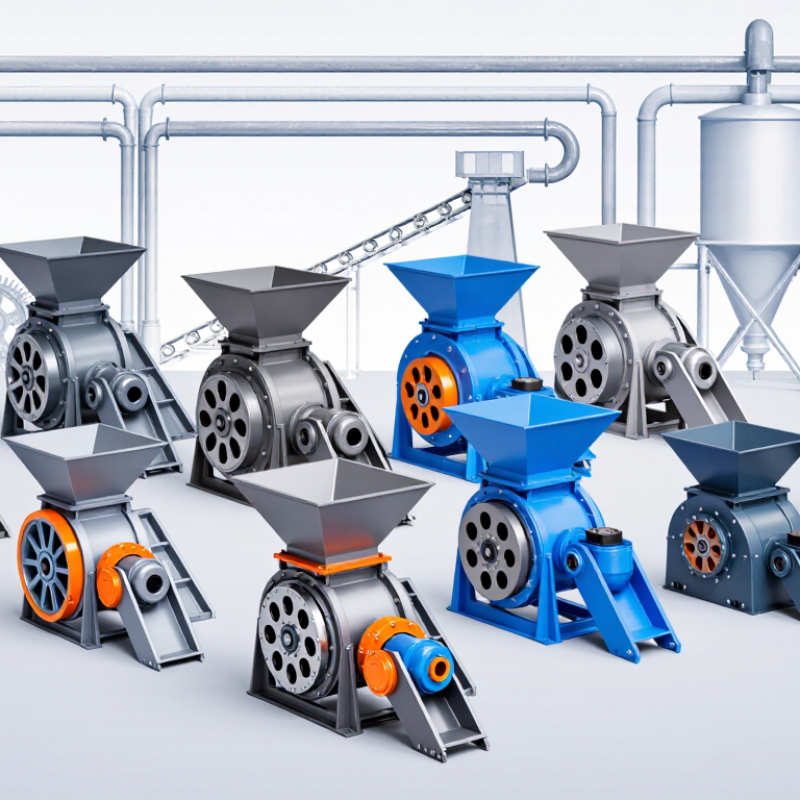
Top 10 Hammer Mill Machine Manufacturers for Global Buyers
What Is a Hammer Mill and How Does It Work?
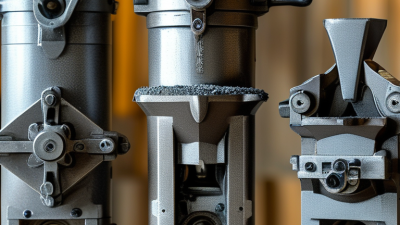
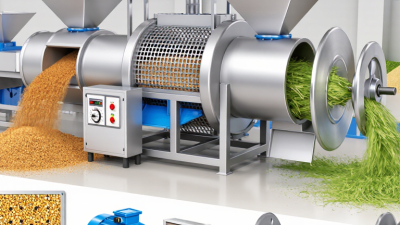
A hammer mill reduces material through repeated impact. Inside its housing, a motor spins a rotor fitted with swinging hammers. Incoming grain or other suitable material meets the hammers, then breaks into smaller pieces. Airflow carries particles toward a perforated screen. Pieces small enough pass through; larger ones remain for further impact. It is not magic. Screen openings, rotor speed, feed rate, and material moisture all affect the final particle size and mill throughput.
For buyers comparing a China Hammer Mill Machine with other options, look beyond the advertised capacity. Ask about screen changes, wear-part replacement, dust control, and how the machine performs with your actual material. FAO’s 2023 report on food and agriculture-related SDG indicators estimated that 13.2% of food was lost globally between harvest and retail in 2021. That figure is not a measure of hammer-mill performance, but it highlights why reliable post-harvest processing matters. A mill cannot prevent every loss. And a finer grind is not always better: it may increase energy use or create unwanted dust. Testing a representative sample is a practical step, though it can be overlooked when purchase decisions move quickly.
Choosing a hammer mill manufacturer starts with your actual material, not a catalogue capacity figure. Ask for test results using a sample close to your feedstock, including its moisture level and target particle size. A mill handling dry grain may behave differently with fibrous material. That detail matters.
Check rotor design, screen options, wear-part availability, and how quickly the supplier can diagnose faults. Request clear drawings, motor-load estimates, noise data, and maintenance intervals. Ask what happens when a screen blocks or a bearing runs hot. A confident answer should include limits, not just promises. Visit an operating installation if possible, and speak with users processing similar volumes. This can reveal issues brochures miss, though one visit cannot prove long-term reliability. Compare warranty terms and spare-part delivery commitments in writing.
Tips: Send a representative sample and request a written trial report. Confirm whether quoted output assumes the screen size and moisture level you need. Check guarding, emergency stops, dust control, and cleaning access. Keep some skepticism; even a well-built machine can disappoint when feed conditions change.
Global hammer mill manufacturing is distributed across several industrial regions, rather than one dominant center. European producers often emphasize precision engineering, safety features, and equipment for food or agricultural processing. East Asian suppliers contribute broad production capacity and export options, while North American manufacturers serve established farm, feed, and recycling markets. South Asian and Turkish manufacturers also supply regional buyers and export markets.
The pattern reflects local demand, access to components, and service networks. A factory near a major port may ship efficiently, but replacement screens and technical support still matter after delivery. Rankings can shift depending on whether a survey measures output, exports, or sales. The map is not perfectly neat. Buyers comparing a Wholesale Hammer Mill Machine should check motor specifications, screen availability, material compatibility, and commissioning support. Ask for test data using a feed material similar to yours; generic capacity figures can mislead.
Tips: Compare landed cost, not just the quoted machine price. Request spare-part lead times and a clear maintenance schedule. Confirm the supplier can explain safe operating procedures in language your operators understand.
Illustrative regional split of a 10-manufacturer shortlist by headquarters location. Counts are not market share or an independently verified global census.
In this illustrative breakdown, Europe accounts for four of the ten shortlist entries, while North America and Asia each account for three. The chart shows company counts by region, not production capacity or sales.
Hammer-mill manufacturers serve animal-feed, grain-processing, food-ingredient, and biomass operations. Their offerings may include complete machines, replacement hammers and screens, feeders, and dust-control equipment. Product ranges differ; not every supplier builds full processing lines. Buyers should match equipment to material, throughput, and desired particle size.
The scale of feed production helps explain this market. Alltech’s 2024 Agri-Food Outlook estimated global feed production at 1.29 billion metric tons in 2023, based on data from 142 countries. In feed mills, hammer mills reduce grains and other suitable ingredients before mixing or pelleting. Poultry, livestock, and aquaculture feeds can require different particle sizes. Small details matter.
Food and grain processors may use mills for ingredients such as cereals, while biomass plants size-reduce suitable agricultural residues. FAO estimated 2023 global cereal production at about 2.84 billion tonnes in its Cereal Supply and Demand Brief. That volume indicates a vast raw-material base, not guaranteed demand for any single machine. A High-Quality Hammer Mill Machine should be assessed against sample material, screen changes, wear-part access, and dust handling. Catalog capacity can mislead. Actual output shifts with moisture, feed consistency, and maintenance, so buyers should request a material test and clear operating assumptions.
When comparing ten hammer-mill suppliers, assess performance and after-sales support together. The FAO’s 2023 SDG progress report estimated that 13.2% of food was lost globally between harvest and retail in 2021. This is not a milling-specific figure, but it highlights why dependable processing matters. Ask suppliers to test your material, screen size, and moisture range. Compare throughput, energy use, particle-size consistency, dust control, and noise. Small details matter.
Check rotor balance, screen-change access, wear-part availability, and maintenance instructions. Strong support includes operator training, clear warranty terms, and a stated service response time. Request references from facilities processing similar materials, then ask about actual downtime and parts delivery. A polished specification sheet can still leave gaps; I would verify performance under realistic conditions before choosing. Support quality is difficult to judge from a brochure alone.
Tips: Get test results in writing. Confirm which spare parts are stocked locally, and clarify who pays for travel, labor, and shipping during warranty repairs.
Global buyers should compare Hammer Mill Suppliers against a defined material and production target, not a headline capacity. Alltech’s 2024 Agri-Food Outlook estimated global feed production at 1.29 billion metric tons in 2023, showing the scale of demand across a diverse industry. That figure is context, not a guarantee of machine performance. Ask suppliers to test your own material, with its stated moisture level and target particle size.
Request a written quote listing throughput, motor power, screen sizes, construction materials, included controls, delivery terms, and recommended spare parts. Ask how capacity changes when the screen aperture or feed moisture changes. That sounds simple. It isn’t. A quote that omits operating conditions makes supplier comparisons unreliable. Request test results and a clear explanation of the test method. The Best Hammer Mill Machine for your operation is the one whose verified performance fits your actual process, not merely the largest model.
Check installation support, operator training, maintenance access, warranty exclusions, and response times for service. Request references from buyers processing similar materials, then verify what the machine achieved in routine production. Small details matter: screen replacement time, bearing access, and dust-control connections can affect daily work. One caution: supplier data may not match your site conditions. Ask what assumptions were used, and record any unanswered questions before placing an order.
| Evaluation Dimension | What to Compare | Evidence to Request | Information to Include in Your RFQ |
|---|---|---|---|
| 1. Material suitability | Confirm that the mill is designed for the specific feed material, including its abrasiveness, fibrous content, bulk density, and moisture condition. | Written material assessment, relevant test results, or a sample-processing report using comparable feedstock. | Material name and composition, current particle size, moisture content, and any unusual handling or safety characteristics. |
| 2. Required throughput | Compare capacity for the stated material and target particle size. Hammer mill output depends on factors such as feedstock, screen openings, moisture, and operating conditions. | Capacity figures with the tested material, screen size, and operating assumptions clearly stated. | Required throughput in kg/h or t/h, operating hours per day, and whether the target is a minimum, average, or peak rate. |
| 3. Finished particle size | Check whether the proposed screen and mill configuration can meet the required size distribution. Screen opening size alone does not define the complete particle-size distribution. | Screen specifications and, where available, a particle-size test report for a comparable application. | Target particle-size range, acceptable oversize fraction, and any downstream process requirements. |
| 4. Rotor and hammer configuration | Review rotor design, hammer arrangement, hammer material, and whether wear parts can be replaced or adjusted for the application. | General arrangement drawing, wear-part specifications, and recommended inspection or replacement guidance. | Material abrasiveness, expected operating schedule, and any preference for reversible or replaceable wear parts. |
| 5. Motor and electrical requirements | Verify installed motor power, voltage, frequency, phase, starting method, and compatibility with the buyer's electrical supply. | Motor datasheet, electrical diagram, and a list of included controls and electrical components. | Country of installation, supply voltage and frequency, phase, control requirements, and applicable electrical standards. |
| 6. Feed and discharge arrangement | Check whether the inlet, outlet, conveying, and feeding interfaces fit the existing production line and material flow. | Dimensioned interface drawings and details of included feeders, conveyors, or discharge equipment. | Feed method, inlet dimensions, discharge direction, conveying needs, and available installation space. |
| 7. Dust, noise, and safety provisions | Clarify guarding, interlocks, dust-control connections, and any site-specific requirements. Applicable safety and environmental rules depend on the installation location. | Safety feature list, operating instructions, dust-collection interface details, and relevant conformity documentation. | Destination country, site safety requirements, dust-control system details, and any required documentation or testing. |
| 8. Wear parts and maintenance | Compare access for routine inspection, screen and hammer replacement, lubrication needs, and availability of replacement parts. | Maintenance schedule, recommended spare-parts list, wear-part material specifications, and spare-parts lead times. | Expected annual operating hours, preferred spare-parts package, and local service or inventory requirements. |
| 9. Testing, warranty, and support | Evaluate commissioning scope, operator training, warranty terms, remote support, and service availability for the destination market. | Written warranty conditions, commissioning description, training scope, and support response arrangements. | Required delivery and commissioning dates, training needs, site location, and preferred support method. |
| 10. Commercial and delivery terms | Compare the complete offered scope, delivery basis, lead time, payment schedule, packaging, and exclusions—not just the machine price. | Itemized quotation, stated Incoterms® rule and named place, lead time, packing details, and list of exclusions. | Quantity, delivery address or port, preferred Incoterms® rule, requested shipment date, and any documentation requirements. |
RFQ tip: Send the same material details, target throughput, particle-size requirement, utilities, and delivery terms to each shortlisted supplier. Ask each supplier to state the assumptions behind its capacity and price so that quotations can be compared on an equivalent basis.
Rotary cutting technology supports production lines that need repeatable cuts across flexible materials, agricultural products, packaging components, and industrial stock. A well-configured machine can help operators maintain consistent dimensions while processing different material types, making it useful for businesses with varied production requirements. Key considerations include blade setup, feed speed, material thickness, and ease of adjustment, since these influence cut quality and workflow efficiency.
The need for dependable material processing is growing alongside production volumes. Textile Exchange’s *Materials Market Report 2024* estimates that global fiber production reached 124 million tonnes in 2023, highlighting the scale of modern textile manufacturing and the importance of efficient material use. In agriculture, the FAO’s *The State of Food and Agriculture 2023* reports that 13.2% of food was lost between harvest and retail in 2021; careful processing is one element of broader efforts to manage resources effectively. Designed in China for precision and versatility, this rotary cutting solution is intended to serve agricultural, textile, packaging, and industrial operations, with a focus on reliable output and integration into modern production lines.
A motor spins a rotor fitted with swinging hammers. They repeatedly strike incoming material. Airflow moves particles toward a perforated screen, where smaller pieces pass through.
Screen openings, rotor speed, feed rate, and moisture all matter. A smaller screen may produce finer material, but it can increase energy use and dust.
No. It may use more energy or create unwanted dust. The right size depends on your process. There is no universal setting.
Ask for a test using material similar to yours, with its moisture level and target particle size. Generic capacity figures can mislead. Test conditions matter.
Request throughput, motor power, screen sizes, construction materials, controls, delivery terms, and recommended spare parts. Ask how screen size and moisture change capacity.
Check screen replacement time, bearing access, dust-control connections, and spare-part lead times. Small details. They can shape daily maintenance.
Production is spread across Europe, East Asia, North America, South Asia, and Türkiye. Regional strengths vary, but service access matters after delivery.
Compare landed cost, installation support, operator training, warranty exclusions, and service response times. Request references from similar operations. Then verify their results.
Record the test method, site assumptions, and unanswered questions. Ask about maintenance schedules and safe operating guidance. It is easy to rush this part.
A Hammer Mill Machine reduces materials by using rapidly moving hammers to break them into smaller, more uniform particles. Buyers should consider the intended material, required capacity, particle-size range, power use, construction quality, safety features, maintenance needs, and availability of technical support when selecting a manufacturer. Comparing suppliers across different regions can also help clarify differences in product range, customization, delivery, and after-sales service.
Hammer mills serve a variety of processing needs, with configurations suited to different materials and industries. Before requesting a quote, global buyers can define their operating requirements, ask for relevant specifications, compare warranty and service terms, and confirm installation and spare-parts support. A clear evaluation of performance, total operating costs, supplier responsiveness, and project fit can make it easier to shortlist suitable manufacturers and choose equipment that meets long-term production goals.