Leave Your Message
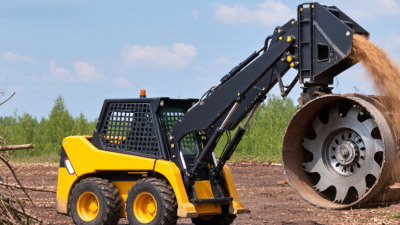
Ever struggle with piles of branches after a storm? Well, there's this thing called a Wood Chipper for Skid Steer that's basically a hydraulic attachment for turning branches, brush, and even small logs into neat wood chips. You just hook it up to your skid steer's auxiliary hydraulic system, and bam—you've got some serious compact power for all sorts of tasks like storm cleanup, utility corridors, landscaping, and land management. Honestly, it's a game-changer if you're into that kind of work.
So, the FAO's latest Global Forest Resources Assessment from 2020 says forests cover about 31% of the Earth's land. That's a massive amount of wood, for sure—but it doesn't mean every twig out there should be fed into a chipper. There's a lot more to it than just grabbing branches. Factors like moisture, diameter, the tree species, and even contamination can make a huge difference in how well they actually chip. And guess what? That's not just a global thing—here in the U.S., it's pretty much the same story. You know, OSHA—the Occupational Safety and Health Administration—actually lists wood-chipping right up there with high-risk work. And honestly, it makes sense. You need guarded equipment, you need to control how material gets fed in, and you absolutely need the right personal protective gear. Look, I get it—everyone wants to get the job done fast. But safety has to come first. Always. Speed? It can wait.
You know, John Ball — he's that arboriculture safety researcher and professor down at South Dakota State — he's said it time and again, something like: “A chipper is only as safe as the people controlling the work zone.” And honestly, that applies just as much to skid-steers. You've gotta keep an eye on that feed opening, make sure you've got solid ground contact, and don't push the hydraulic limits. Because a vine can snag and yank all of a sudden, or you hit a hidden rock and your knives are done for in seconds.
If you've been following industry reports from Grand View Research or MarketsandMarkets, you've probably noticed the same thing we have: demand for compact forestry and vegetation-management machinery is still going strong. They make a fair point about versatile attachments becoming more important, though let's be honest—market forecasts can only tell you so much. You really have to get out and test this stuff. At first glance, a Wood Chipper for a skid steer looks like a simple attachment. It's not. So this guide breaks down how it actually works, where it performs well, and where its limits deserve a little more attention.
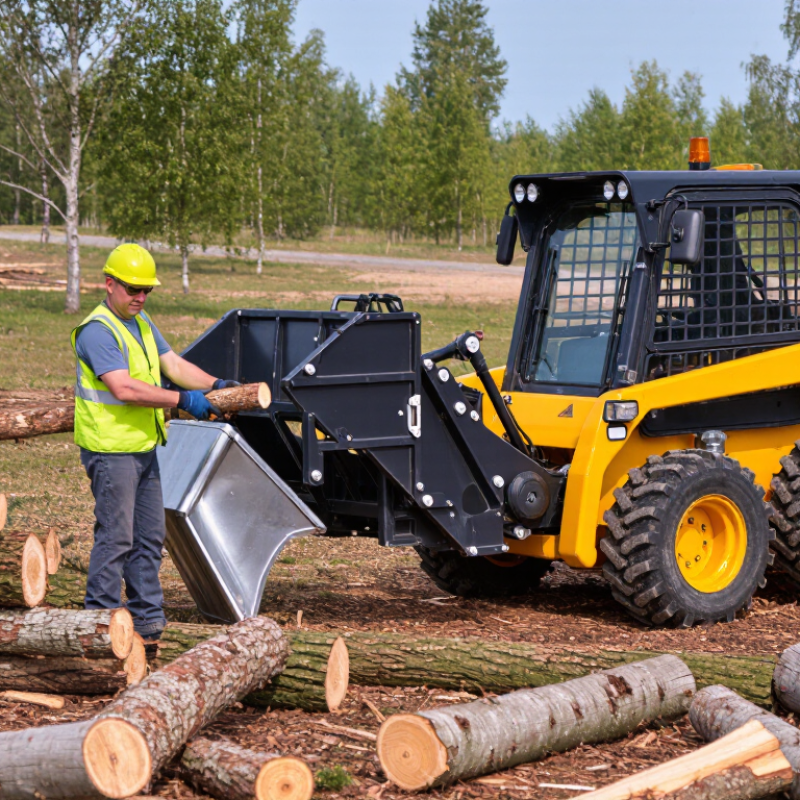
What is a wood chipper for skid steer? It is a hydraulic attachment that converts branches, logs, and brush into manageable wood chips. The skid steer supplies hydraulic power, while the chipper uses rotating knives or a cutting drum. This setup is useful for clearing storm debris, maintaining property edges, and preparing organic material for mulch. A China Wood Chipper For Skid Steer may include a feed chute, discharge hood, hydraulic motor, and adjustable cutting system. Exact features vary, so operators should check flow requirements before connecting it.
In practical use, the attachment works best with clean, reasonably straight branches. Wet vines and tangled roots can slow feeding or cause blockages. Keep hands away from the chute, and use suitable eye, hearing, and head protection. Stay alert. I have found that small diameter limits matter more than many buyers expect. Feeding oversized timber can strain the motor and dull the knives quickly. Inspect bolts, hydraulic hoses, guards, and cutting edges before each shift. The skid steer should stand on firm, level ground, especially when the discharge chute swings toward nearby workers or equipment. A cautious operator also measures branch size, hydraulic flow, and available service access before choosing a chipper. Mistakes happen. Regular maintenance simply makes them less expensive.
| Specification or Consideration | Typical Range or Description | What It Means for Operation |
|---|---|---|
| Definition | Hydraulic-powered wood-processing attachment | A skid steer wood chipper is an attachment that uses the loader's auxiliary hydraulic system to feed and process branches, limbs, and small logs into wood chips. |
| Primary Power Source | High-flow or standard-flow auxiliary hydraulics | The required hydraulic flow depends on the attachment design. The skid steer's auxiliary flow and pressure should match the chipper's specifications before use. |
| Common Hydraulic Flow | Approximately 15–45 gallons per minute | Lower-flow models may suit standard auxiliary systems, while high-flow models generally support faster rotor or disc operation and higher productivity. |
| Typical Chipping Capacity | About 4–12 inches in diameter | Capacity varies by cutter design, material type, moisture content, and hydraulic power. Hard, crooked, or forked material may reduce practical throughput. |
| Feed System | Gravity feed or hydraulic feed rollers | Hydraulic feed rollers pull branches into the cutting chamber and can improve control when processing longer, heavier, or irregular material. |
| Cutting Mechanism | Disc or drum with replaceable knives | The rotating cutting assembly reduces wood into chips. Sharp, correctly adjusted knives help maintain chip quality and reduce unnecessary hydraulic load. |
| Discharge Direction | Fixed or adjustable chute | A discharge chute directs chips away from the machine. Adjustable chutes can help load chips into a trailer, windrow, or designated collection area. |
| Chute Discharge Height | Commonly about 6–10 feet | The available height depends on attachment geometry. Confirm the clearance needed for the intended truck, trailer, or containment system. |
| Attachment Weight | Approximately 1,000–2,500 pounds | The attachment's weight affects the skid steer's rated operating capacity, lifting performance, stability, and transport requirements. |
| Compatible Skid Steer Size | Often mid-size to large-frame machines | Compatibility depends on hydraulic flow, rated operating capacity, quick-attach dimensions, and the machine's ability to safely handle the attachment. |
| Typical Applications | Land clearing, storm cleanup, right-of-way maintenance, and brush management | The attachment is useful where branches and small trees must be reduced on site, helping limit hauling volume and cleanup time. |
| Material Best Suited for Chipping | Branches, brush, limbs, and small straight logs | Material should be free of soil, rocks, metal, wire, and other contaminants, which can damage knives, bearings, and the cutting housing. |
| Chip Size | Often approximately 0.5–2 inches | Actual chip size is influenced by knife arrangement, rotor speed, feed rate, and the type and condition of the wood being processed. |
| Productivity Factors | Hydraulic power, feed rate, material diameter, and operator technique | Productivity increases when the machine is correctly matched to the attachment and material is prepared in manageable lengths without excessive dirt or foreign objects. |
| Key Safety Features | Emergency stop, feed control, guarded openings, and discharge protection | Operators should follow the attachment manual, keep people clear of the feed and discharge zones, and never reach into the infeed or cutting chamber while components are moving. |
| Routine Maintenance | Knife inspection, bolt checks, lubrication, and hydraulic-hose inspection | Regular maintenance helps preserve cutting performance and allows damaged knives, loose fasteners, leaks, and worn components to be identified early. |
| Main Advantages | On-site processing, reduced hauling volume, and attachment versatility | Because the chipper mounts to a skid steer, one carrier can often perform loading, positioning, and chipping tasks on the same worksite. |
| Important Limitations | Hydraulic compatibility, attachment weight, material restrictions, and access conditions | A chipper is not suitable for every skid steer or every type of wood. Always verify flow, pressure, capacity, clearance, and operating conditions before use. |
Specifications are representative industry ranges rather than guaranteed values for every attachment. Always verify the manufacturer's technical requirements and the skid steer's operating manual before selecting or operating a wood chipper.
It converts branches, brush, and small logs into manageable wood chips. A rotating rotor cuts material against a fixed anvil. The skid steer supplies hydraulic power and lifting strength.
Common parts include a hydraulic motor, feed chute, cutting rotor, knives, anvil, discharge chute, and deflector. Each part affects feeding, cutting, or chip direction. Simple parts still need careful inspection.
Disc chippers use knives mounted on a rotating disc. They often handle straight branches efficiently. Drum chippers use knives on a cylindrical drum. Their wider openings may accept crooked limbs and tangled brush.
Compare the chipper’s required flow and pressure with the skid steer’s auxiliary ratings. Also check the loader’s rated operating capacity. Too much demand can slow cycles or strain the hydraulic system. Numbers matter.
Knife sharpness, rotor speed, anvil clearance, and wood moisture affect chip size. Species, branch shape, feeding angle, and operator skill affect output. Wet hardwood may clog the discharge chute. Dry branches can create heavy dust.
Gravity-fed hoppers suit simpler operations and lighter material. Hydraulic rollers improve control with wet or uneven branches. Grapple-fed systems can reduce ground work during large cleanup jobs. Control feels better.
Inspect hydraulic hoses, knife bolts, guards, fasteners, and the anvil before each shift. Check the discharge area for obstructions. Keep people outside the marked exclusion zone. Do not rush.
Keep branches aligned with the feed opening. Avoid forcing crooked logs into the chamber. Use controlled feeding and maintain clear visibility around moving parts. A positive feed stop is useful. Speed is not productivity.
Compare actual hydraulic requirements, chip consistency, consumption, and clearing time across several loads. Test conditions should include wet material, uneven ground, and different wood species. A showroom result may not represent roadside work. That assumption can fail.
A Wood Chipper For Skid Steer is a powerful attachment designed to turn branches, logs, and other woody debris into manageable wood chips. Connected to the skid steer’s hydraulic system, it uses controlled hydraulic power to feed material into a cutting chamber, where rotating knives, drums, or discs reduce the wood. Different chipper designs suit different workloads, from compact units for light cleanup to heavy-duty models for larger branches and continuous operation.
Important considerations include hydraulic flow compatibility, feeding capacity, cutting speed, discharge direction, chip size control, and overall attachment balance. A reliable chipper should also include protective guards, emergency stop controls, and safe feeding procedures. Regular maintenance involves sharpening or replacing cutting components, inspecting hydraulic lines, clearing buildup, and checking fasteners. Common applications include land clearing, storm cleanup, trail maintenance, landscaping, and recycling tree waste into mulch or biomass material. When properly matched, operated, and maintained, this attachment can improve productivity while helping keep work areas organized and efficient.